
Verbal reasoning practice: how to build real skill
2 November 2026 · The ElevenReady Team
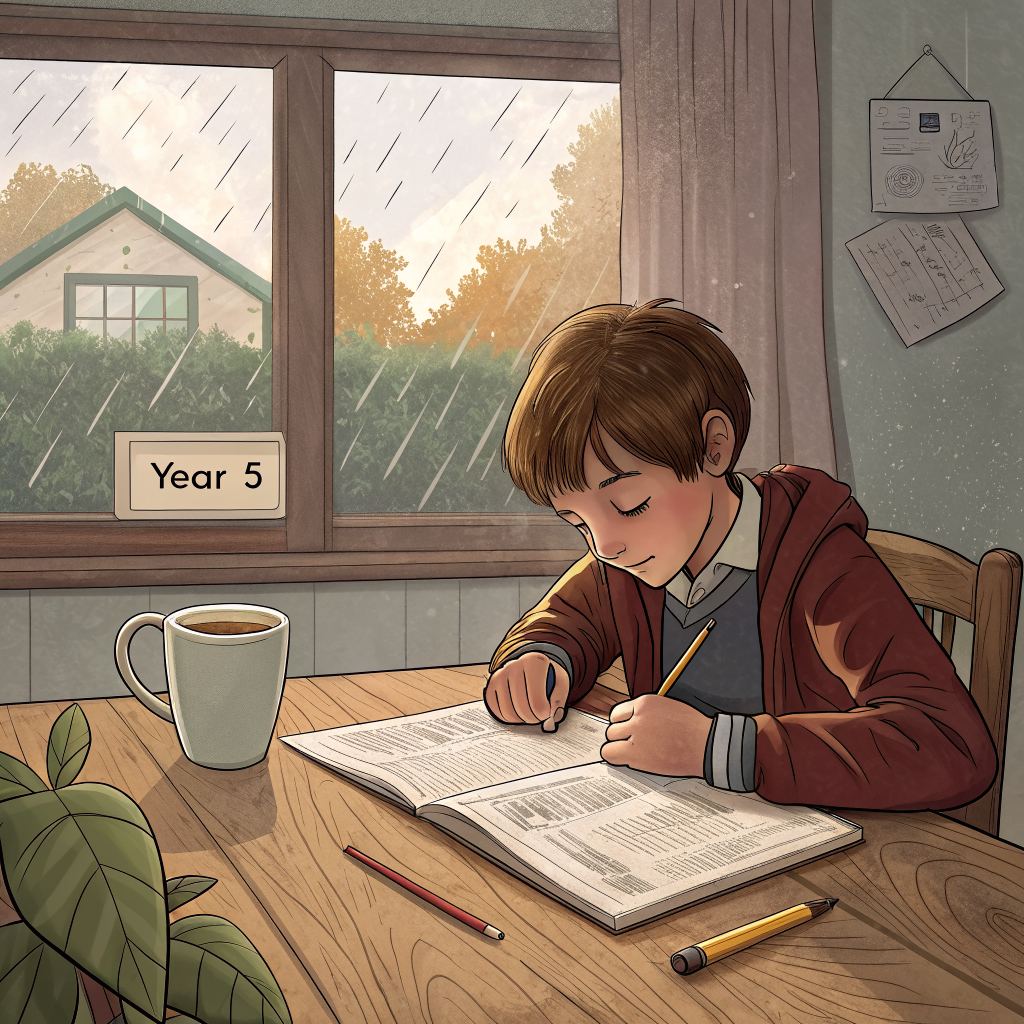
Verbal reasoning practice works best when your child learns how each question type behaves, rather than racing through random pages and hoping it clicks. For many Year 5 families, this is the paper that feels hardest to decode at first because the questions can change quickly, the timing is tight, and small misunderstandings can cost easy marks.
The good news is that verbal reasoning is very learnable. Once children start spotting the patterns behind the questions, they usually become quicker, calmer and more accurate.
What is verbal reasoning in the 11+?
Verbal reasoning in the 11+ is a paper that tests how well a child can spot patterns, relationships and rules in language-based questions. That can include vocabulary, letter sequences, word connections, codes, logical deductions and careful reading of instructions.
In GL-style preparation, children often meet short, fast questions rather than long passages. The challenge is not only knowing the answer, but recognising what kind of task is in front of them within seconds. That is why it helps to group practice by question type. If your child knows, “This is a code question” or “This is an alphabetical order question”, they are already halfway to a method.
If you want a broader picture of how 11+ preparation fits together, ElevenReady’s overview of how the platform works is a useful place to start.
What are the most common verbal reasoning question types?
The most common verbal reasoning question types include synonyms and antonyms, letter sequences, codes, odd-one-out, related words, alphabetical order, hidden words and simple logic questions. Exact mixes vary, but these are the styles many children need to get comfortable with.
- Synonyms and antonyms — choosing words with similar or opposite meanings.
- Letter sequences — spotting what comes next in a pattern.
- Codes — turning words into numbers or symbols using a rule.
- Odd-one-out — finding the word that does not belong.
- Word relationships — completing analogies such as “book is to read as fork is to...”.
- Alphabetical order — sorting words accurately, often by the second or third letter.
- Hidden words — finding smaller words inside larger ones.
- Logic and deduction — using clues to work out an answer.
Parents do not need to be experts in every format. What matters is helping your child notice the rule behind the question and apply it consistently.
How do you practise verbal reasoning question types effectively?
You practise verbal reasoning question types effectively by focusing on one type at a time, teaching a clear method, and only then adding timed practice. Children tend to make faster progress when they move from understanding to accuracy to speed — in that order.
- Teach the type first. Name the question type and talk through what it is asking.
- Model a method. For example, in alphabetical order, compare the first letter, then the second, then the third if needed.
- Do a small set. Five to eight similar questions is often enough for one sitting.
- Review mistakes properly. Ask, “Did you not know the word, miss the rule, or rush?”
- Repeat later. Revisit the same type after a day or two to check it has stuck.
- Add timing last. Once the method is secure, use short timed bursts.
Random mixed worksheets can make children feel busy, but they do not always build understanding. Targeted sets are usually more useful at the start.
How can I help my child with tricky verbal reasoning vocabulary?
You can help with tricky verbal reasoning vocabulary by building word knowledge little and often in everyday life, not just in formal 11+ sessions. A weak vocabulary can make several verbal reasoning question types harder at once, especially synonyms, antonyms and word relationships.
Try keeping it simple:
- Pause over unfamiliar words in reading and talk about meaning in context.
- Ask for a synonym, an opposite, or a sentence using the new word.
- Group words into families, such as movement words, emotion words or describing words.
- Revisit useful words during the week instead of treating them as one-off learning.
Reading still matters here. Children who read widely often have an easier time recognising shades of meaning, even when they have never seen that exact question before. You can also explore more support in ElevenReady’s 11+ resources for parents.
Why does my child make silly mistakes in verbal reasoning?
Children make silly mistakes in verbal reasoning mainly because of speed, misreading instructions, or switching methods halfway through a question. Often the issue is not a lack of ability but a lack of consistency.
Three fixes that usually help
- Slow down the first step. Make sure your child identifies the task before answering.
- Underline the rule words. Words like opposite, next, same and not matter a lot.
- Keep an error notebook. Write down the type of mistake, not just the correct answer.
If your child repeatedly drops marks on the same style of question, that is useful information. It means practice should be narrower, not broader.
How often should a Year 5 child do verbal reasoning practice?
A Year 5 child usually does best with short verbal reasoning practice sessions two to four times a week, rather than long blocks once in a while. Twenty focused minutes can be far more productive than an hour of weary guessing.
A sensible weekly pattern might include one session on vocabulary, one on a single question type, one mixed review, and one short timed task. In Year 6, some children are ready for slightly more timed work, but the same rule still applies: quality first, quantity second.
If you are trying to make verbal reasoning practice part of a wider plan, ElevenReady’s 11+ guides for families can help you keep things structured without overloading the week.
Done well, verbal reasoning practice is not about drilling hundreds of questions. It is about helping your child recognise patterns, trust a method and improve steadily over time.
Common questions
Is verbal reasoning mostly about having a big vocabulary?
No. Vocabulary helps, but verbal reasoning also tests pattern-spotting, logic, careful reading and following rules accurately.
Should my child do mixed verbal reasoning papers straight away?
No, not usually. It is better to learn question types in small groups first, then move to mixed sets and timed papers later.
What if my child freezes when the question type changes?
Practise switching between two known types in one short session. That builds flexibility without making the work feel chaotic.